The Future of B2B: Utilizing AI Automation to Drive Success
The landscape of B2B is shifting as firms progressively turn to AI automation for critical advantage. This transformation promises to boost effectiveness and customer involvement with sophisticated modern technologies. The combination of these tools is not without its difficulties. Understanding exactly how businesses can navigate this progressing terrain will be essential for future success. What aspects will determine the performance of AI in this sector? The responses might redefine conventional company versions.
Understanding AI Automation in B2B
As organizations increasingly look for performance, understanding AI automation in B2B ends up being essential. AI automation describes the use of man-made knowledge technologies to enhance and improve organization procedures. In the B2B field, this involves the combination of AI devices to take care of jobs such as data analysis, client communications, and supply chain procedures. By leveraging artificial intelligence and natural language processing, business can boost precision, reduce human error, and speed up decision-making (AI Automation For B2B). AI automation assists in the handling of huge volumes of data, allowing organizations to remove important insights and maximize their operations. As organizations navigate this technical landscape, a thorough grasp of AI automation's abilities will certainly encourage them to remain responsive and competitive to market demands
Trick Benefits of AI Automation for Organizations
While many organizations grapple with raising functional demands, AI automation presents many advantages that can significantly enhance their performance. One substantial advantage is performance; AI systems can carry out repeated tasks much faster and with greater precision than humans, therefore releasing and lowering mistakes up workers for more tactical initiatives. In addition, AI automation enables data-driven decision-making by assessing huge datasets promptly, supplying understandings that educate organization approaches. Price decrease is one more key benefit, as automation lessens labor prices and maximizes resource allotment. AI can boost scalability, enabling companies to adapt to market adjustments quickly. Ultimately, the assimilation of AI automation promotes innovation, making it possible for firms to stay competitive in a swiftly developing landscape.
Changing Client Experiences With AI
AI is reshaping client experiences by improving and enabling personalized communications engagement. With the implementation of anticipating analytics, businesses can expect consumer demands and choices, causing much more customized services. Additionally, simplifying assistance procedures with AI innovation boosts efficiency and contentment, ultimately changing the total customer trip.
Customized Communications and Interaction
Individualized communications have ended up being a keystone of effective customer interaction in the B2B landscape. By leveraging AI-driven remedies, services can customize their communication and offerings to meet the special demands of each customer. Automated systems analyze client habits, information, and choices, enabling organizations to produce personalized experiences that reverberate with their target market. This degree of customization not just enhances customer complete satisfaction however likewise promotes long-lasting loyalty. Furthermore, AI tools assist in real-time interactions, allowing businesses to react promptly and effectively to inquiries and responses. Consequently, firms can construct more powerful connections with clients, making sure that their solutions line up with developing expectations. Ultimately, personalized involvement via AI causes enhanced results and sustained success in the competitive B2B market.
Anticipating Analytics Application
As companies increasingly look for to enhance customer experiences, implementing anticipating analytics has arised as a critical method in the B2B industry. By leveraging data-driven understandings, organizations can prepare for customer needs and preferences, allowing them to tailor their offerings extra efficiently. Anticipating analytics uses innovative algorithms and historic data to forecast future actions, allowing organizations to identify possible challenges and possibilities. This proactive technique not only enhances consumer complete satisfaction yet also promotes commitment by delivering appropriate and prompt remedies. Additionally, predictive analytics aids in source allotment, making certain that marketing efforts are focused on high-value leads. Ultimately, the combination of anticipating analytics outfits B2B companies with the tools required to change client interactions and drive long-term success in a progressively affordable landscape.
Simplifying Assistance Processes
Enhancing customer experiences in the B2B industry prolongs beyond predictive analytics; enhancing assistance processes plays a necessary duty. By incorporating AI-driven remedies, businesses can improve and automate routine queries feedback times, leading to increased client contentment. Chatbots and online assistants give 24/7 assistance, addressing client needs quickly and minimizing the problem on human agents. This automation allows teams to concentrate on intricate problems, promoting more significant interactions. Moreover, AI devices can examine support data to recognize fads and locations for renovation, making certain constant enhancement of service top quality. As companies embrace these technologies, they position themselves as customer-centric and responsive, ultimately driving commitment and company development in a significantly competitive landscape.
Simplifying Workflow and Processes
Streamlining procedures and processes in B2B settings is crucial for improving overall performance. By optimizing operations efficiency and automating regular tasks, companies can decrease hand-operated errors and maximize important sources. This shift not just enhances performance but additionally enables groups to concentrate on strategic campaigns that drive development.
Optimizing Operations Efficiency
Maximizing workflow effectiveness is important for services seeking to minimize functional costs and enhance performance. By assessing existing processes, organizations can determine traffic jams and redundancies that prevent performance. Carrying out structured treatments enhances interaction and partnership among groups, ensuring that jobs are completed a lot more swiftly. Using data-driven understandings Minarik AI allows companies to make educated decisions that fine-tune procedures better. Additionally, embracing integrated innovations can promote smooth details circulation, minimizing the risk of errors and hold-ups. As businesses embrace these changes, they not only foster a more nimble workplace but also position themselves to respond quickly to market needs - Growth Systems For B2B. Inevitably, concentrating on operations performance permits companies to allot sources properly, driving lasting success in a significantly affordable landscape
Automating Routine Tasks
Many organizations are significantly transforming to automation to manage routine tasks, recognizing its possible to substantially boost operational efficiency. By releasing AI-driven options, business can improve repetitive tasks such as information entrance, invoice handling, and client inquiries. This change not only reduces human mistake however also maximizes useful worker time, allowing team to focus on strategic campaigns and value-added tasks. In addition, automation can enhance response times and solution consistency, bring about improved customer contentment. As services navigate a competitive landscape, leveraging automation for regular tasks comes to be vital for enhancing operations and preserving agility. Eventually, this approach promotes innovation and drives growth, positioning companies for lasting success in the developing B2B setting.
Enhancing Decision-Making Through Information Insights

Getting Rid Of Obstacles in AI Application
Although AI application holds the assurance of considerable functional renovations, companies frequently deal with a myriad of difficulties that can hinder progression. Trick barriers consist of data high quality concerns, as several ventures have problem with incomplete or irregular datasets necessary for effective AI training. Additionally, resistance to change within the labor force can restrain the fostering of AI modern technologies, as staff members might be afraid work variation or do not have the required skills. Budget plan restraints likewise present a difficulty, restricting financial investment in the needed infrastructure and skill. Furthermore, integrating AI systems with existing processes can be intricate, requiring substantial time and sources. Overcoming these challenges demands a calculated method that includes comprehensive training, adjustment monitoring, and a commitment to continuous renovation in AI efforts.
Future Fads: The Following Frontier in B2B Automation
While the landscape of B2B automation remains to develop, emerging fads are poised to redefine how companies operate. The assimilation of sophisticated artificial knowledge will promote a lot more personalized customer experiences, enabling businesses to customize solutions exactly to client requirements. Furthermore, the surge of predictive analytics will certainly enable companies to anticipate market shifts and optimize decision-making procedures. Automation of routine jobs through robotic procedure automation (RPA) will improve efficiency, minimizing functional costs substantially. Additionally, the adoption of blockchain modern technology promises enhanced openness and safety and security in deals. As these technologies gain traction, business will significantly leverage AI-driven insights to promote cooperation, improve supply chains, and improve total productivity, marking a transformative shift in the B2B landscape.
Often Asked Inquiries
What Sorts Of Businesses Can Benefit A Lot Of From AI Automation?
Manufacturing, logistics, and customer care organizations can profit most from AI automation. These fields enhance operational efficiency, decrease expenses, and enhance client interactions, eventually causing raised performance and productivity in a competitive market.
How Can Local Business Implement AI Automation Efficiently?
Local business can execute AI automation efficiently by identifying repetitive tasks, choosing user-friendly devices, making certain ample training for staff members, and progressively incorporating services to enhance workflows while monitoring performance and readjusting approaches based upon comments.
What Are Typical False Impressions Regarding AI in B2B?
Typical misconceptions concerning AI in B2B consist of the belief that it is only for huge business, that it guarantees instantaneous outcomes, and that it can fully change human decision-making as opposed to enhancing it. AI Automation For B2B.
Just How Does AI Automation Effect Employee Responsibilities and Task Security?
AI automation improves worker duties by streamlining repeated tasks, cultivating effectiveness and development. While some concern work loss, it usually develops chances for upskilling and new settings, eventually enhancing work security through added value and efficiency.
What Abilities Are Needed to Take Care Of AI Automation Projects?
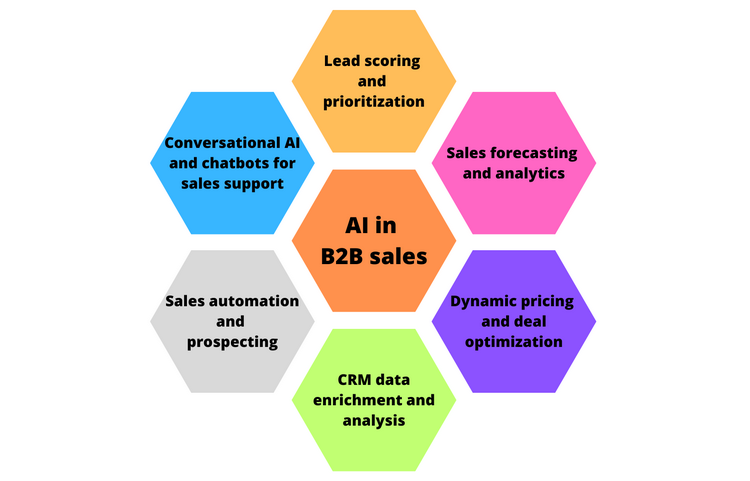
As services increasingly look for efficiency, recognizing AI automation in B2B becomes essential. AI automation helps with the handling of huge quantities of data, allowing services to draw out beneficial insights and optimize their operations. While several organizations grapple with boosting operational needs, AI automation offers many benefits that can substantially boost their efficiency. Automation of routine tasks through robotic procedure automation (RPA) will improve effectiveness, decreasing functional expenses substantially. Production, logistics, and customer service organizations can profit most from AI automation.